
Update on Hope's Journey (part 3)

If you have not been following Hope's story and would like to read the first 2 blogs CLICK HERE for part 1 and CLICK HERE for part 2.

It's been over a week now that Hope has been with us, and her progress is nothing short of unbelievable! From the moment she arrived, it was clear that she was a gentle giant, but I could never have anticipated just how quickly she would adapt to her new environment and thrive. Her energy levels have skyrocketed; she’s bounding around the house like a big ole' puppy, filled with an exuberance that is infectious.
Every day, I witness her transformation... Initially, she seemed a bit reserved, perhaps overwhelmed by the new surroundings and the changes in her routine. However, as the days have passed, she has blossomed into a lively and spirited companion. Her tail wags with such enthusiasm that it seems to have a life of its own, and she greets each day with a playful attitude that makes me smile.
I have to be particularly careful when we’re playing together, as she doesn’t quite know her own strength. Her excitement can be overwhelming at times; she often runs into me with a force that surprises me. It’s as if she’s rediscovered a sense of joy and freedom that had been missing for far too long.
Her skin is healing, and some of her hair is starting to grow back on her scalp. On Friday, we took her to see Dr. Wiley at Monroe County Animal Hospital in Sweetwater for a follow-up, and she was very pleased with the progress. We received some excellent news! Initially, when Hope was examined and had her blood tested, the in-house test was positive. However, the lab test returned negative, which is fantastic news. This means Hope's recovery will be faster and slightly less costly. They also rechecked her for parasites, and this time it came back negative, indicating the medication was effective. Now, she will need a preventative measure to avoid future infestations. The only downside is that Hope has demodectic mange. This type of mange is not contagious to humans or other animals, not even other dogs. Demodectic mange is actually part of the normal skin flora in small numbers but can overgrow in dogs with weakened immune systems. In Hope's case, the mange spread over large areas of her face and smaller areas on her legs and chest, leading to secondary infections, which is why her face was so bloody, with pus draining from the open wounds.
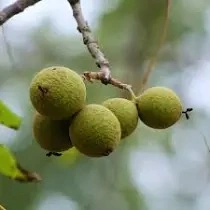
II've been using some antibacterial wipes that we got for a cat we treated about a year ago. The vet mentioned that the wipes are excellent for Hope's mange. I was running low and thought I'd need to purchase more, but then I remembered that one of my salves, which contains Black Walnut Hull infused coconut oil, was specifically made for fungal and bacterial issues like mange, athlete's foot, and ringworm. I only had one tin left (looks like I'll need to make more), so I began using it this weekend, and it appears to be effective. The salve, Black Walnut Hull Anti-Fungal Salve seems to be softening the crusty skin on her face, and the redness is diminishing.
We are still administering a couple of antibiotics for her infections, and she has received her first set of vaccines. We have another appointment with Dr. Wiley in a few weeks. Since we were informed that Hope is not contagious to other animals, we gave her a bath. The water was filthy, but she handled it quite well. Initially, she tried to pull away, but Brian held her with the leash, and she quickly settled down. She seemed to enjoy the scrubbing part, though not the rinsing as much. After we finished, she ran out and rolled in the grass—oh well, we tried! She didn't get too dirty, and when I brushed her the next day, she looked pretty good. Before the bath, she smelled terrible, and her coat felt greasy. After the bath and brushing, she smells much better, though the odor isn't completely gone. I'll give her another bath once the weather warms up again. But she looks significantly better.

She is still a little head shy, which means that she tends to flinch or pull away when someone reaches out to her, particularly when hands come near her head or face. This behavior is quite common in animals that may have had limited positive interactions with humans in the past or have experienced some form of trauma. However, despite this shyness, she is incredibly gentle in her demeanor. Her soft approach and calm presence suggest that she possesses a kind heart and a gentle spirit, which is a wonderful trait to have, especially in a farmstead environment.
To help her become more comfortable, we will begin the process of slowly introducing her to other animals on the farmstead. This gradual approach is essential because it allows her to acclimate at her own pace, reducing the likelihood of overwhelming her. We have been allowing her to observe the other animals from a safe distance. As she becomes more relaxed and confident, we can gradually decrease the distance and increase the duration of these interactions.
I have a strong feeling that she is going to do just fine in this new environment. Her gentle nature is likely to help her bond with the other animals, and I believe that with time, she will learn to trust not only her human caretakers but also her fellow farmstead residents. In fact, I suspect that she may adapt much better than some of the other animals that are already here permanently. Some of those animals have their own quirks and behaviors that can be more challenging to manage, while her gentle spirit may make her a more harmonious addition to the group.

Overall, I am optimistic about her future here. With patience, understanding, and consistent positive reinforcement, I believe she will thrive in this nurturing environment, forming connections and relationships that will help her overcome her initial shyness. This journey of building trust and friendship will not only benefit her but also enrich the lives of all the animals and humans on the farmstead.
I will keep posting Hope's story until she is out of the woods, both physically and mentally. We are planning on having her spayed as soon as Dr Wiley says she is healthy enough.
I will also be posting some of the other animal's rescue stories if you're interested. CLICK HERE for other blogs on animals and farm products.
CLICK HERE to contribute to Hope's Veterinary Care. Her current veterinary expenses and medications total $748.91, and we have received $376.00 in donations so far. Additional medications need to be collected in the next couple of days, which will cost around $120.
CLICK HERE to go to my store. All purchases go towards caring for all the rescues on the property.


Comments